
Reliance Industries Ltd reported a 12.5 per cent fall in its March quarter net profit, primarily impacted by the global energy crisis affecting its oil and chemicals business, while its consumer-facing Jio Platforms unit saw a 13 per cent increase in profit after tax.
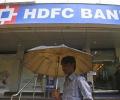
HDFC Bank, India's largest private-sector lender, has revised its FY27 growth trajectory, stepping back from earlier guidance to align with a more measured 12 per cent year-on-year expansion, citing geopolitical uncertainties.

Three treasury employees in Hazaribag, Jharkhand, have been arrested for allegedly embezzling Rs 15.41 crore from government bank accounts over eight years, prompting criticism from the opposition BJP.

Markets face risk of a prolonged bear phase as oil shocks and geopolitical tensions test inflation, growth and investor confidence globally, points out Debashis Basu.

A prolonged supply shock can transmit to lower incomes, and dampen confidence and sentiment, warns Aditi Nayar, chief economist, head-research and outreach, ICRA.

S&P Global Ratings warns that a sustained rise in crude oil prices to $130 per barrel could significantly slow India's economic growth, weaken fiscal metrics, and strain corporate and banking sector performance, potentially reducing growth by up to 80 basis points.

Despite a sharp increase in import duties on gold and silver to 15 per cent, the precious metals are trading at significant discounts in the domestic market, with gold seeing discounts of up to $200 an ounce and silver up to $6 an ounce.

Moody's Ratings has downgraded India's growth forecast for financial year 2026-27 (FY27) to 6 per cent from 6.8 per cent, attributing the revision to weaker consumption and industrial activity, elevated energy prices, and rising input costs stemming from the West Asia conflict.

The measures announced by it risk backfiring, disrupting the foreign exchange market, and intensifying the very pressures they seek to contain, with broader consequences for the economy points out Rajeswari Sengupta.

India has expressed strong concerns over attacks on commercial ships in the Strait of Hormuz, citing its importance to India's energy and economic security. Ambassador Yojna Patel highlighted the need to respect international law and ensure the safety of seafarers, while also addressing broader Middle East issues including the situation in Gaza and Lebanon.

Indian stock markets experienced a significant sell-off, with the Sensex tumbling over 1,300 points, driven by escalating crude oil prices due to US-Iran tensions and Prime Minister Narendra Modi's call for austerity measures, which amplified investor concerns about India's economic outlook.
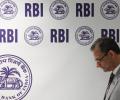
Uncertainties stemming from the West Asia crisis and its potential impact on inflation and economic growth were key factors in the Reserve Bank of India's Monetary Policy Committee (MPC) decision to maintain the status quo on interest rates, according to the recently released MPC meeting minutes.

'The West Asia or the Gulf crisis has shown that what we develop as national infrastructure when things are not as bad as they could be, we forget to plan for adversities.'

West Asia conflict triggers sharp sell-off in Indian markets, with realty, banking and auto stocks leading losses amid energy shock fears.

The Supreme Court has ordered a 'fair, dispassionate, transparent, and time-bound' investigation by the CBI and ED into the Anil Dhirubhai Ambani Group, addressing concerns over alleged large-scale banking fraud and demanding accountability.

'Even last year, when India bought gold, the physical quantity was much less than the previous years.'

The Indian rupee depreciated by 52 paise to settle at 93.35 against the US dollar, driven by failed US-Iran peace talks, surging crude oil prices due to a potential US blockade of Iranian ports, and a global flight to the greenback. This geopolitical uncertainty is also leading to foreign capital withdrawal from domestic equities.

Even if there is an early agreement on a cessation of hostilities in West Asia, the price shock will not go away easily, points out A K Bhattacharya.

S&P Global Ratings has increased India's GDP growth forecast for the next fiscal year to 7.1 per cent, citing private consumption, investment, and exports as key drivers. However, the agency also cautioned that the conflict in the Middle East could strain India's fiscal position due to higher energy prices.

The benchmark BSE Sensex's trailing 12-month price-to-earnings (P/E) multiple has declined to 20.2x, its lowest since May 2020, driven by a record $42 billion FPI selloff since September 2024 and concerns over corporate earnings and economic growth.

"It is quite possible that the rates will remain low in the near to medium term, but that will depend on how conditions evolve," said RBI Governor Sanjay Malhotra.

Goldman Sachs has materially lowered its earnings growth forecast for Indian companies by a cumulative 9 percentage points over the next two years.

'Existing investors who have not acted so far may consider holding on to these funds with the understanding that the higher returns they expected from them may now take longer to materialise.'
The rupee plunged to a fresh low of 93.72 against the dollar on Friday, falling 1.15 per cent in a single session - its sharpest one-day decline since February 24, 2022 - as elevated crude oil prices and strong dollar demand from oil-marketing companies and foreign portfolio investors (FPIs) weighed on the currency.

Stock markets closed higher for the second straight session on Tuesday, driven by gains in bank, IT and capital goods shares.

Wipro reported Q4FY26 IT services revenue of $2.6 billion, a modest 0.2 per cent Q-o-Q constant currency growth, with adjusted operating profit margin beating estimates at 17.2 per cent. The company announced a significant share buyback of ~15,000 crore, but faces near-term growth challenges, particularly in the BFSI segment, and has issued a soft Q1FY27 revenue guidance.

A US-sanctioned tanker carrying Iranian crude oil has rerouted mid-voyage from its previously indicated destination of India to China, raising questions about payment issues and the future of India's Iranian oil imports.

The Indian rupee rebounded against the US dollar after the Reserve Bank of India (RBI) restricted banks' net open positions in dollars. This move prompted banks to sell dollars, providing temporary support for the rupee amidst ongoing geopolitical tensions and rising oil prices.

'I cannot imagine that any NSA before Ajit Doval would have given us this kind of time and this kind of engagement. They would have offered slogans, or nothing at all. That, too, tells you something.'

The Indian rupee weakened against the US dollar due to rising crude oil prices, geopolitical tensions in the Middle East, and foreign fund outflows.

Despite recent share price dips, Bharti Airtel is strategically positioned for growth, driven by investments in data centres via Nxtra, a potential tariff hike, and strong performance in Africa, alongside efforts to deleverage and expand its subscriber base in underpenetrated rural markets.

Asian Development Bank (ADB) on Friday warned that India's limited crude oil reserves of about 100 million barrels - sufficient for only 40-45 days of consumption - leave the country particularly vulnerable to supply disruptions through the Strait of Hormuz amid the ongoing war in West Asia.

'We are profoundly energy-dependent on the Gulf. That dependency must now be redirected towards the United States, because we require American permission to procure oil.' 'We additionally require Iranian permission to acquire oil from that source. So India now has to seek two separate permissions merely to secure its energy supply.' 'Should we be compelled to source from America, or from Venezuela -- which is, in effect, American-controlled supply -- that will inevitably carry a price premium, an elevated shipping cost, and a considerably extended delivery timeline, given the distances involved.'

Finance Minister Nirmala Sitharaman announces increased domestic LPG production to offset import disruptions caused by Middle East tensions, alongside assurances of fertiliser availability and the clearing of UPA-era oil bonds.

Markets will look for clear guidance on how the MPC interprets the uncertainty and what it implies for the future course of monetary policy, points out Rajeswari Sengupta.

The big question is whether Trump is any longer in command of the situation. For all practical purposes, the war seems set to cascade as the US is preparing for a potential ground operation in Iran and threatens to destroy 'bridges next, then electric power plants', points out Ambassador M K Bhadrakumar.

Both sides have now revealed a preference for escalation over strategic defeat, and each new provocation narrows the space for the next pause. The Touska seizure, Iran's refusal to negotiate under blockade, Israel's strikes on Iranian oil infrastructure -- all of these add up to an increasingly untenable situation. This makes the wild card -- Trump and his motormouth -- more consequential than ever, notes Prem Panicker in his must read blog on the Iran War.

Sensex and Nifty post steepest weekly loss in over a year, falling nearly 3 per cent.

Households should moderate large discretionary expenses for the time being.
'They should prioritise essential spending. They should maintain an emergency fund covering 6 to 12 months of expenses.'

The clock on the ceasefire is running out. But everyone's already whispering about round two, possibly as soon as this weekend.
 © 2026 Rediff.com - Advertise with us - Disclaimer - Privacy Policy - Sitemap - Feedback - About us - Terms of use - Grievances